Choosing the best Breakfast Bar And Stools set is rarely about appearance alone. A polished countertop may look impressive, yet feel uncomfortable after ten minutes of use. The right combination should support everyday meals, quick coffee breaks, homework, and relaxed conversation. It must also fit the room without blocking walkways or crowding nearby cabinets.
A practical evaluation starts with measurements. Allow roughly 24 to 30 inches of width per person, depending on the stool design. Check the counter height before buying, because counter stools and bar stools are not interchangeable. A footrest, stable base, and supportive seat can make a noticeable difference. Materials matter too. Solid wood offers warmth, while metal and molded plastic usually simplify cleaning. Upholstered seats feel softer, but spills may become frustrating.
Small details count.
In real homes, comfort often beats visual drama. Sit on the stools for several minutes, test their balance, and inspect how easily they slide beneath the bar. I have found that swivel seats can be convenient, but cheaper mechanisms may wobble or become noisy. That is an imperfect trade-off worth considering. This guide compares dimensions, construction, comfort, maintenance, and value to identify sets that perform reliably. No single set suits every household. Your best choice depends on your space, habits, budget, and tolerance for upkeep.
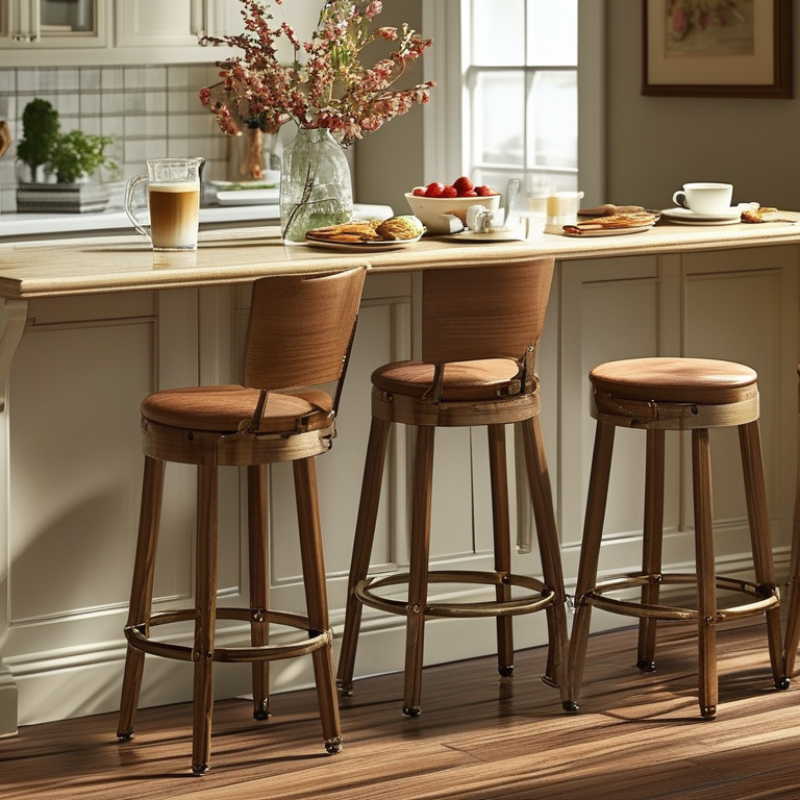
A high-quality breakfast bar and stools set begins with fit, not decoration. The 2024 Houzz U.S. Kitchen Trends Study reports that 76% of renovating homeowners upgrade their kitchen island. Many islands now serve as dining, working, and storage zones. That makes comfort essential.
Allow about 24 inches of width per seated person. Leave roughly 9 to 12 inches between the seat and countertop underside.
A 24-to-27-inch seat usually suits counter-height surfaces, while taller bars need higher stools.
Materials reveal quality quickly. Solid wood, steel, and well-sealed engineered surfaces should feel stable, not hollow or fragile. Sit on each stool and shift your weight. A good frame should resist twisting, while levelers should stop floor wobble. Rounded edges matter when children or hurried adults move around the counter.
Look for a footrest positioned naturally, without forcing the ankles upward. A practical set also needs a clear load rating and surfaces that tolerate coffee spills, crumbs, and repeated wiping.
The Business and Institutional Furniture Manufacturers Association uses performance testing to assess strength, durability, and stability in furniture. That standard does not guarantee perfect home comfort. It is only one useful checkpoint.
In my experience, shoppers often inspect upholstery first and forget the joints underneath. That is a mistake. Slight stitching irregularity may be harmless, but loose hardware is not. Even careful choices can age poorly when sunlight, moisture, or daily dragging enters the picture.
A good breakfast bar starts with the right height, not the stool’s appearance. A standard kitchen counter is about 36 inches high, while a raised bar usually reaches 42 inches. Choose counter stools with 24–26-inch seats for a 36-inch surface. Bar stools usually need 28–30-inch seats. The difference matters. A seat that is too high can press against your knees and make short meals uncomfortable.
Measure the usable counter length before choosing seating capacity. Allow roughly 24 inches of width per person, plus enough elbow room for plates and cups. A 72-inch counter can usually seat three people comfortably. Leave at least 12–15 inches of knee clearance beneath the overhang. Houzz’s 2024 U.S. Kitchen Trends Study reported islands in 76% of updated kitchens, showing how common casual seating has become. However, a bigger island is not always better. I once planned four stools for a narrow counter, and movement quickly became awkward.
Tips: Sit at the stool before buying. Check whether your feet touch the floor or a footrest. Measure from the floor to the underside of the counter. For children or mixed-height households, adjustable seating may work better. Keep about 6 inches between stools, although wider seats may need more space. Recheck door swings and walking paths. A beautiful set can still fail in daily use.
The best set depends on your kitchen’s materials, traffic, and visual language. In a farmhouse kitchen, warm oak stools soften painted cabinetry and stone surfaces. A contemporary room suits slim metal frames, molded seats, and a quartz or porcelain counter. Industrial kitchens benefit from blackened steel, reclaimed wood, and visible bolts. Scandinavian spaces need pale timber, curved edges, and woven or washable fabric.
Houzz’s 2024 U.S. Kitchen Trends Study reports that 63% of renovating homeowners include a kitchen island. That makes stool comfort more important than appearance alone. NKBA planning guidelines recommend about 24 inches of counter width per seated person. They also suggest adequate knee clearance beneath the counter. Measure this carefully. A beautiful stool becomes irritating when knees strike the cabinet.
Material choice should follow daily use. Solid wood feels warm but needs protection from spills. Powder-coated metal handles busy kitchens well, though it may feel cold without a padded seat. Upholstery improves comfort, but textured fabric can hold crumbs.
In my experience, wipeable faux leather works better for families than delicate linen. I once chose style over cleaning needs. It looked excellent, briefly. Consider a footrest, stable legs, and a seat height matched to the counter. The “perfect” set may still need compromise.
Choosing the best breakfast bar and stools set depends on daily comfort, household safety, and simple maintenance. Seat height should match the counter, leaving roughly 9 to 12 inches between the seat and tabletop. This space supports relaxed knees and prevents awkward leaning during breakfast. A contoured seat helps, but thick padding is not always better. Excessively soft cushions can make posture unstable.
I once chose stools by appearance alone. After several mornings, the hard edge pressed against my thighs. That mistake changed how I judge seating. A stable footrest, gently rounded corners, and a backrest can reduce fatigue during longer meals. Test each stool for wobbling before buying. Check that the base stays firm when weight shifts sideways. Families with children should avoid sharp metal edges and poorly secured swivel parts. Anti-slip feet also protect flooring and reduce sudden movement.
Maintenance affects comfort over time. Look for sealed surfaces that resist coffee, milk, and cooking grease. A damp cloth should remove ordinary spills without harsh scrubbing. Removable fabric covers are useful, but zippers and seams need careful inspection. Loose stitching can worsen after repeated washing. Recheck bolts every few months, especially on frequently used stools. Wood may need occasional conditioning, while painted finishes can show scratches quickly. I prefer practical surfaces, although “easy-care” does not mean maintenance-free. Water left near joints can still cause swelling, staining, or hidden weakness.
| Set Type | Typical Size | Best For | Comfort Features | Safety Features | Maintenance Requirements | Space Efficiency | Practical Assessment |
|---|---|---|---|---|---|---|---|
| Compact Two-Stool Set Small apartments and narrow kitchens |
Bar width: 35–45 in Counter height: 34–36 in Stool height: 24–26 in |
Limited floor space | Footrests on both stools; slightly contoured seats; backrests that support the lower back. | Recommended: non-slip feet, rounded corners, stable four-leg bases, and a stool seat that fits fully beneath the counter. | Wipe-clean laminate, sealed wood, or coated metal; check and tighten hardware every few months. | Excellent | A strong choice when width is limited, provided the stools can be tucked away without blocking walkways. Overall: 4.4/5 |
| Standard Counter-Height Set Everyday family use |
Bar width: 48–60 in Counter height: 34–36 in Stool height: 24–26 in |
Most kitchens and dining areas | Seat height matched to a 9–12 in gap below the counter; supportive backrests; medium-density padded seats. | Recommended: wide bases, floor protectors, rounded edges, and a weight capacity suitable for intended users. | Fabric seats need regular vacuuming and spot cleaning; sealed surfaces can usually be cleaned with a damp cloth and mild soap. | Very good | The most balanced option for comfort, stability, capacity, and ease of cleaning. Overall: 4.7/5 |
| Adjustable-Height Set Multi-user households |
Bar width: 42–54 in Seat range: approximately 22–32 in Adjustable stool height |
Households with different heights | Height-adjustable seats; footrests that move with the seat; padded cushions on better-designed models. | Check carefully: choose a broad base, a reliable locking mechanism, and a load rating appropriate for regular use. | Clean the adjustment column and inspect moving parts; avoid abrasive cleaners that can damage the finish. | Good | Highly versatile, but mechanical parts require more inspection and may be less stable than fixed-leg designs. Overall: 4.1/5 |
| Backless Stool Set Minimalist interiors |
Bar width: 40–52 in Counter height: 34–36 in Stool height: 24–26 in |
Short meals and uncluttered rooms | Cushioned or contoured seats; a built-in footrest is especially important because there is no back support. | Acceptable with care: select stools with a broad footprint, slip-resistant feet, and no sharp exposed edges. | Usually easy to wipe and store; upholstered versions require faster cleanup of spills. | Excellent | Saves visual and physical space, but it is less comfortable for long breakfasts, homework, or extended conversations. Overall: 3.9/5 |
| Upholstered High-Comfort Set Long meals and frequent seating |
Bar width: 54–72 in Counter height: 34–36 in Stool height: 24–26 in |
Comfort-focused dining areas | Padded seat and backrest; footrest at a comfortable height; upholstery that supports an upright sitting position. | Recommended: stable legs, reinforced joints, rounded frame edges, and stain-resistant or removable covers. | Vacuum fabric regularly and treat spills promptly; removable covers simplify deep cleaning. | Moderate | Offers the best sitting comfort, but takes more room and demands more care than hard-surface seating. Overall: 4.5/5 |
| Foldable or Drop-Leaf Set Flexible or multipurpose rooms |
Bar width: 36–60 in Folded depth: approximately 8–16 in Counter height: 34–36 in |
Occasional dining and small rooms | Adequate for short meals; comfort improves with padded stools and a properly positioned footrest. | Inspect regularly: locking hinges, folding supports, and pinch points must be secure before use. | Clean hinges and joints periodically; do not overload the folding surface or use harsh products on the finish. | Outstanding when folded | Excellent flexibility, but moving parts make construction quality and routine safety checks especially important. Overall: 4.0/5 |
| Solid-Wood Family Set Durability and traditional styling |
Bar width: 48–72 in Counter height: 34–36 in Stool height: 24–26 in |
Long-term everyday use | Rigid, supportive seats; comfort is improved by a shaped seat, a backrest, and a correctly positioned footrest. | Recommended: reinforced joints, anti-tip stability, rounded corners, and a tested load capacity. | Dust and wipe regularly; protect the surface from standing water, excessive heat, and prolonged direct sunlight. | Good | Durable and repairable, though generally heavier and less convenient to move than metal or engineered-board designs. Overall: 4.5/5 |
Value begins with fit, not the lowest price. The 2024 Houzz U.S. Kitchen Trends Study reports that 76% of renovating homeowners add or upgrade an island. That demand makes breakfast seating a practical investment, not merely decoration. Measure the counter height, available legroom, and walking clearance before comparing sets.
A counter stool usually suits a 34–36-inch surface, while a bar stool fits a 40–42-inch surface.
Allow about 24 inches of width per seat.
Measure twice.
Compare the complete cost. A cheaper set may use thin particleboard, weak joints, or fixed-height stools. Look for a sturdy frame, reinforced connections, a wipeable finish, and a weight rating supported by test information. The National Kitchen and Bath Association’s 2024 Design Trends Report continues to identify islands as major multifunctional zones, so daily comfort deserves attention.
Choose a seat with a footrest positioned naturally, especially for children or older adults. I have found that a backless stool saves visual space but becomes uncomfortable during long breakfasts. That is costly.
Also check delivery, assembly, replacement parts, and return terms. A five-year warranty sounds reassuring, yet unclear coverage can reduce its real value.
The best comparison is imperfect: balance durability, comfort, dimensions, and maintenance against your household’s actual routine.