
Blog
10 Best Modern Dining Tables for Wholesale Buyers
Choosing the right Modern Dining Table can shape a retailer’s collection, showroom appeal, and long-term customer satisfaction. Wholesale buyers need more than attractive photographs. They must examine construction, dimensions, materials, packaging, pricing, and supplier reliability. A table may look elegant online yet arrive with fragile edges or difficult assembly. That detail matters.
This guide introduces ten modern dining tables suited to different wholesale strategies. Each option reflects practical market considerations, including compact apartment layouts, large family dining spaces, hospitality projects, and contemporary furniture stores. We consider engineered wood, solid timber, tempered glass, metal frames, and mixed-material designs. We also review surface durability, leg stability, finish consistency, carton protection, and estimated maintenance needs. These points help buyers compare products with greater confidence.
Supplier communication remains essential. Ask for material specifications, product samples, inspection procedures, minimum order quantities, lead times, and replacement policies. Confirm whether dimensions are consistent across production batches. A low unit price can become expensive after damage, delays, or excessive returns. It is also wise to review relevant safety and environmental documentation for each market. Requirements may differ by country and customer segment.
Some recommendations involve trade-offs. A thinner tabletop may reduce shipping costs, but it can feel less substantial. Glossy finishes attract attention, yet they may reveal fingerprints quickly. No table is perfect. The strongest purchasing decision balances design, performance, logistics, and realistic customer expectations. This selection aims to support informed sourcing, while leaving room for careful testing before large-scale orders.
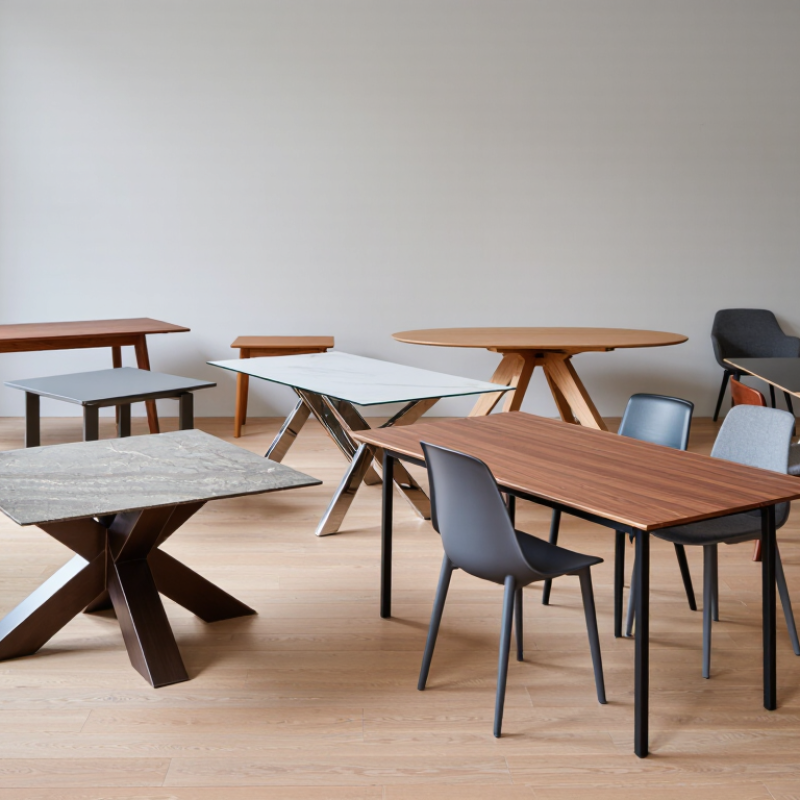
How to Define the Best Modern Dining Tables for Wholesale Buyers
For wholesale buyers, “best” does not simply mean the most attractive dining table. It means a dependable product that survives handling, fits target homes, and leaves room for profit. Modern design should offer clean proportions, practical finishes, and useful flexibility. Start with use conditions. A compact 120-centimeter table may suit city apartments, while an extendable model serves larger households. Measure tabletop thickness, leg clearance, and seating capacity. Small details matter.
Evaluate materials with evidence, not showroom language. Solid wood needs stable moisture control and consistent finishing. Veneer can offer visual quality with lower weight, but its edge treatment deserves close inspection. Powder-coated metal should resist ordinary scratching and show even coverage. Ask for load tests, assembly instructions, packaging photos, and inspection records. Samples should be assembled on a real floor, not only photographed. Check wobble, alignment, odors, surface marks, and cleaning response. A beautiful sample can still hide weak cartons.
Wholesale value also depends on repeatability. Compare dimensions across batches, hardware availability, replacement parts, lead times, minimum order quantities, and defect procedures. Confirm that product documentation supports the destinations where tables will be sold. Reliable suppliers answer specific questions and disclose limitations. That matters. I have seen buyers overvalue a low unit price, then absorb storage and rework costs. My judgment can be imperfect too; lighting changes color, and one sample cannot represent every batch. Use a scoring sheet with weighted priorities, including durability, packaging, delivery consistency, and customer appeal. Leave room for revision after a trial order.
10 Best Modern Dining Tables for Wholesale Buyers - How to Define the Best Modern Dining Tables for Wholesale Buyers
| No. | Modern Table Type | Best For | Typical Top Material | Base Material | Standard Dimensions (L × W × H) |
Seats | Assembly Level | Wholesale Evaluation Focus | Indicative Durability |
|---|---|---|---|---|---|---|---|---|---|
| 1 | Rectangular Extendable Table | Family dining rooms, apartments, and flexible hospitality spaces | Solid wood or engineered wood with durable laminate or veneer | Powder-coated steel or solid wood | 160–220 × 90 × 75 cm | 6–8 | Moderate | Check extension mechanism, panel alignment, locking strength, and packed dimensions | 8–15 years with normal indoor use |
| 2 | Round Pedestal Table | Compact dining areas, cafés, and conversation-oriented layouts | Engineered wood, solid wood, ceramic, or sintered stone | Steel or molded wood pedestal | 100–130 × 100–130 × 75 cm | 4–6 | Moderate | Assess pedestal stability, edge protection, tabletop balance, and chair clearance | 8–15 years with normal indoor use |
| 3 | Oval Dining Table | Modern homes requiring softer edges and efficient seating | Veneered wood, solid wood, glass, or sintered stone | Steel, aluminum, or wood | 180–220 × 95–110 × 75 cm | 6–8 | Moderate | Review corner radius, top rigidity, leg placement, and protection against edge damage | 8–15 years with normal indoor use |
| 4 | Marble-Look Sintered Stone Table | Premium residential interiors and upscale dining projects | Sintered stone or porcelain slab | Powder-coated steel or stainless steel | 160–200 × 90–100 × 75 cm | 6–8 | High | Verify slab thickness, impact resistance, crate protection, and total shipment weight | 10–20 years with proper handling |
| 5 | Glass-Top Dining Table | Light-looking interiors, showrooms, and contemporary apartments | Tempered glass, typically 8–12 mm thick | Stainless steel, aluminum, or powder-coated steel | 140–180 × 80–90 × 75 cm | 4–6 | Moderate | Confirm safety-glass certification, polished edges, suction protection, and packaging quality | 8–12 years when protected from severe impact |
| 6 | Solid Wood Slab Table | Natural-style dining collections and premium furniture programs | Seasoned solid hardwood or softwood | Solid wood, steel, or iron | 180–240 × 90–110 × 75 cm | 6–10 | Moderate | Evaluate moisture content, board stability, surface finishing, knots, and seasonal movement | 15–30 years with regular maintenance |
| 7 | Compact Drop-Leaf Table | Small apartments, serviced apartments, and space-saving collections | Engineered wood, rubberwood, or solid wood | Wood or powder-coated steel | 80–140 × 80 × 75 cm | 2–4 | Moderate | Test hinges, leaf supports, load capacity, folded footprint, and repeated opening cycles | 7–12 years with proper use |
| 8 | Industrial Metal-and-Wood Table | Loft interiors, restaurants, cafés, and casual dining spaces | Reclaimed-style wood, solid wood, or wood-look laminate | Powder-coated steel or iron | 140–200 × 80–100 × 75 cm | 4–8 | Low to moderate | Inspect welds, coating adhesion, floor protectors, corrosion resistance, and top fastening | 10–20 years indoors |
| 9 | Minimalist Trestle Table | Modern dining rooms, co-working kitchens, and adaptable layouts | Veneered MDF, solid wood, or high-pressure laminate | Steel, wood, or aluminum trestles | 160–240 × 85–100 × 75 cm | 6–10 | Moderate | Check lateral stability, leg spacing, tabletop deflection, and compatibility with armchairs | 8–15 years with normal use |
| 10 | Outdoor-Ready Modern Table | Patios, balconies, garden dining, and hospitality terraces | Compact laminate, ceramic, treated wood, or aluminum composite | Aluminum, galvanized steel, or treated hardwood | 140–220 × 80–100 × 75 cm | 4–8 | Low to moderate | Confirm UV resistance, drainage, rust protection, wind stability, and outdoor care requirements | 5–12 years depending on climate and maintenance |
| Wholesale selection criteria: prioritize stable construction, consistent dimensions, safe packaging, replacement-part availability, efficient carton volume, clear care instructions, and compliance with the destination market’s furniture safety requirements. | |||||||||
Related Posts
-

Round Dining Table and Chairs Comparison Exploring Design Versatility and Space Optimization
-

The Ultimate Checklist for Sourcing the Perfect Solid Wood Dining Room Table
-
Unlocking Market Trends for Dining Set Solid Wood at the 2025 China Import and Export Fair
-
Why Choosing a Modern Dining Table Can Transform Your Home Decor
-

What is Diningroom Furniture and How to Choose the Best?
-
Essential Tips for Choosing Diningroom Furniture for Your Home?