page-head

Blog

What Are the 2026 Top Dining Room Furniture Types for Buyers?

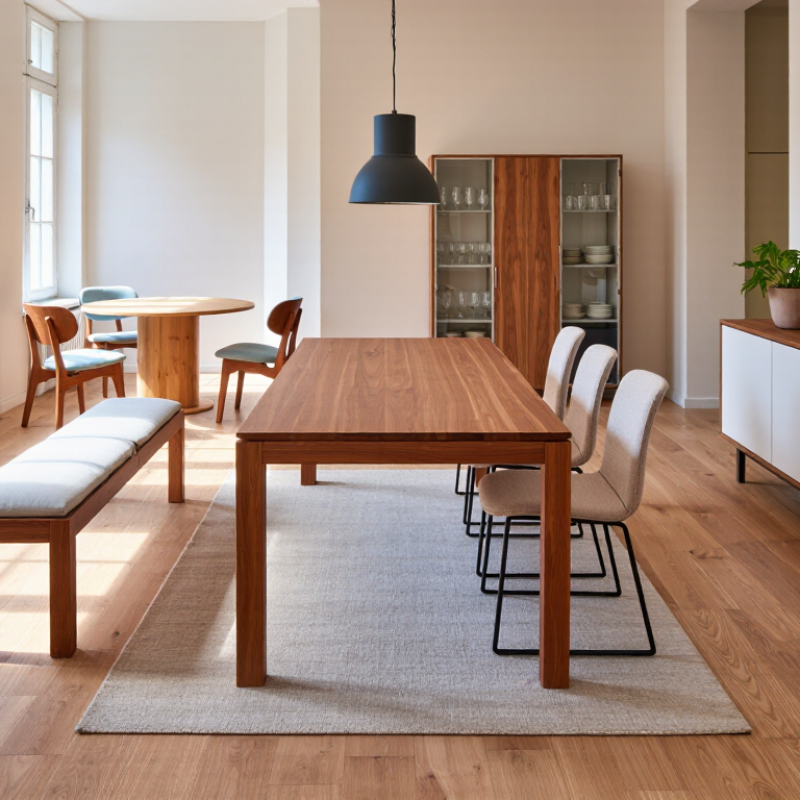
Choosing dining room pieces in 2026 requires more than following attractive showroom photos. Buyers are comparing comfort, durability, maintenance, and the space each item consumes. Dining Room Furniture now includes extendable tables, round pedestal tables, upholstered chairs, benches, sideboards, and compact modular sets. Each type serves a different household.

An extendable table remains practical for apartments and growing families. It can seat four on ordinary evenings, then expand for holiday meals. Round tables improve conversation and reduce sharp corners in busy rooms. Upholstered chairs add comfort, especially during long dinners, but their fabric needs careful cleaning. Benches save floor space, although they may feel less supportive for older guests. Sideboards provide useful storage for plates, table linens, and serving bowls.

Material quality deserves close attention. Solid wood may develop small marks, yet those signs can reveal real use rather than poor construction. Veneer can offer stability and lower cost, but buyers should inspect edge finishing and hardware. I have found that chair comfort is difficult to judge from photographs alone. Sit for ten minutes if possible. Measure walking paths, doorways, and chair clearance before ordering. A beautiful table that blocks circulation is not a successful purchase.

Current buyer preferences suggest a stronger interest in flexible, repairable, and space-conscious designs. However, trends are not universal rules. Household size, dining habits, budget, and cleaning routines should guide the decision. Reliable retailers should provide dimensions, material details, care instructions, and clear warranty terms. The best choice may look less dramatic, but it should work every evening. That matters more.
What Are the 2026 Top Dining Room Furniture Types for Buyers?

What Defines the Top Dining Room Furniture Types in 2026?

What defines the top dining room furniture types in 2026 is practical flexibility, not decoration alone. Buyers increasingly need rooms that support family meals, remote work, and occasional entertaining. Grand View Research’s 2024 home furniture analysis identifies customization and multifunctionality as important market directions. This supports the growing appeal of extendable dining tables, nesting chairs, and compact storage cabinets.

Extendable tables remain a leading choice for changing household sizes. A 120-centimeter table can serve four people, then expand for weekend guests. Round pedestal tables also deserve attention. They improve conversation and remove sharp corners from busy walking paths. Upholstered dining chairs add comfort, but performance fabric and removable covers matter more than decorative stitching. Small details decide daily satisfaction.

Storage is another defining feature. Sideboards with adjustable shelves can hold plates, linens, and small appliances without crowding the tabletop. The 2024 Houzz & Home Study reports that homeowners continue investing in improved storage during renovations, although dining-specific figures vary by market. That limitation matters. Not every trend transfers equally across countries.

Professional buyers should also check seat height, table clearance, finish durability, and repair access. Solid wood can age well, yet it may require seasonal care. Engineered panels can offer stable performance at a lower cost, though poorly sealed edges may disappoint. I have found that buyers often overvalue appearance during showroom visits. After several months, easy cleaning and comfortable seating usually matter more. The perfect dining set may not exist. A resilient, adaptable one is more realistic.

Which Dining Tables Are Best for Different Dining Spaces?

What Are the 2026 Top Dining Room Furniture Types for Buyers?

The best dining table depends on movement, seating needs, and available floor space. For compact apartments, a round pedestal table often works well. Its central base gives legs more freedom and softens narrow corners. A drop-leaf table can stay small on ordinary days, then expand for guests. Measure the open chairs, not only the tabletop. Leave about 90 centimeters behind each chair for comfortable passage.

Long rectangular tables suit open dining rooms and shared family spaces. They provide clear seating positions and room for serving dishes. Choose an extendable design when weekly needs differ from holiday gatherings. In a square room, a square table can feel balanced, but its corners may interrupt traffic. Oval tables offer similar seating capacity with gentler edges. Solid wood feels warm and repairable, while engineered surfaces may resist stains more consistently. Neither option is perfect.

Tips: Mark the table footprint with painter’s tape before buying. Add chairs, then walk around them with a full serving tray. Check leg placement beneath the tabletop, especially with benches or child seating. If the room feels crowded during testing, it will not improve after delivery. I once underestimated door clearance, and the table arrived before the mistake became obvious. Good planning prevents that frustrating lesson.

What Are the 2026 Top Dining Room Furniture Types for Buyers?

Which dining tables are best for different dining spaces? The chart compares common table shapes by practical seating capacity and the approximate minimum room size needed for comfortable circulation.

Planning guide: Round and square tables suit compact rooms, rectangular tables work well in narrow or larger dining areas, oval tables improve circulation around corners, and extendable tables offer the greatest flexibility for changing household sizes. Room-size estimates allow approximately 90 cm of clearance around the table.

How Do Dining Chairs Balance Comfort, Style, and Durability?

In 2026, dining chairs are expected to balance comfort, style, and daily durability. Buyers are no longer choosing appearance alone. A beautiful chair feels disappointing when its seat becomes painful after twenty minutes.

Comfort begins with supportive proportions. Look for a seat height near standard dining-table dimensions. A gently curved back can reduce pressure during long meals. Small details matter. On a six-seat table, leaving enough elbow space prevents constant bumping. Test the chair with both feet flat on the floor, not just for a few seconds in a showroom.

Materials also shape long-term value. Upholstery should resist stains, especially in homes with children or frequent guests. Tightly woven fabric is practical, while removable covers make cleaning less stressful. Solid wood frames often feel stable, but joints still need careful inspection. Nothing lasts forever. Moisture, dragging, and uneven floors can weaken any chair over time.

Style should support the room rather than dominate it. Curved silhouettes create a softer atmosphere, while simple straight lines suit compact dining areas. Mixed materials can add interest, but too many finishes may look unsettled. I once favored a slim chair because it saved visual space; after repeated use, its narrow seat felt restrictive. That mistake changed my buying method. Sit, shift your weight, and inspect the underside. A chair must work in real life, not only in photographs.

What Storage Furniture Completes a Functional Dining Room?

In 2026, practical dining rooms need more than a table and chairs. Storage furniture keeps serving pieces, linens, and everyday dishes close without crowding the room. A sideboard remains a dependable choice. Its drawers can hold cutlery, while lower cabinets protect larger bowls from dust. Choose adjustable shelves when possible. They accommodate changing tableware sizes.

A narrow buffet works well in smaller dining areas. It provides serving space without blocking walking paths. For open-plan homes, a glass-front cabinet can display ceramics while keeping them organized. Closed storage is often safer for busy households, especially near cooking areas. I once placed a deep cabinet beside a dining chair, and the door interrupted movement. That mistake taught me to measure door clearance, not just wall width. Storage needs breathing room.

Tips: Leave at least 90 centimeters around frequently used furniture. Check shelf height before buying. Use drawer dividers for utensils and placemats. Wall-mounted cabinets can save floor space, but secure installation matters. A bar cart adds mobility, though it may become cluttered quickly. Keep only regular-use items visible. Even attractive storage can feel awkward when every surface is full.

What Are the 2026 Top Dining Room Furniture Types for Buyers? - What Storage Furniture Completes a Functional Dining Room?

A practical buyer comparison of common dining furniture formats and storage pieces for residential dining spaces. Dimensions are typical product ranges and should be checked against the exact item before purchase.

Furniture Type Primary Function Typical Dimensions Typical Capacity Storage or Space Benefit Key Buying Consideration
Rectangular Dining Table Traditional family dining, entertaining, homework, and multipurpose use. Height: 28–30 in
Width: 36–44 in
Length: 60–96 in
4–10 people Provides the largest central work and dining surface; extendable versions improve flexibility. Allow approximately 36 in of clearance around the table for chairs and comfortable circulation.
Round Dining Table Shared meals and conversation in compact or square-shaped rooms. Height: 28–30 in
Diameter: 42–60 in
4–6 people No sharp corners and an unobstructed central area can improve movement in smaller rooms. A pedestal base usually provides more usable legroom than four corner legs.
Oval Dining Table Combines the seating efficiency of a rectangular table with softer edges. Height: 28–30 in
Width: 36–44 in
Length: 60–84 in
4–8 people Softens narrow walkways while retaining a practical length for serving dishes. Measure the widest point and confirm that the room can accommodate the curved profile.
Square Dining Table Balanced seating for compact dining areas and open-plan kitchens. Height: 28–30 in
Side length: 36–48 in
2–4 people Works well in nearly square rooms and can be pushed against a wall when not fully occupied. Large square tables may require diners to reach farther across the surface.
Extendable Dining Table Daily dining with additional seating for guests. Height: 28–30 in
Closed length: 48–72 in
Extended length: 72–120 in
4–12 people Reduces the everyday footprint while providing extra surface area when needed. Measure the fully extended length and reserve storage space for removable leaves if applicable.
Dining Chair Individual seating for dining tables and occasional desk use. Overall height: 32–38 in
Seat height: 17–19 in
Seat width: 16–20 in
1 person Armless designs can fit more seats around a table and are easier to slide beneath the tabletop. Keep roughly 24 in of table edge per seated adult for reasonable elbow room.
Dining Bench Flexible seating along one side of a rectangular or extendable table. Seat height: 17–19 in
Depth: 14–18 in
Length: 42–72 in
2–4 people Can seat multiple people and often tucks completely under the table to save floor space. Choose a depth that leaves enough knee room and use a weight rating suitable for multiple users.
Sideboard Storing tableware, linens, serving pieces, and dining accessories. Height: 30–36 in
Depth: 15–20 in
Length: 48–72 in
High storage Low-profile storage keeps frequently used items near the dining table without blocking sightlines. Check door and drawer swing clearance, wall length, and the load capacity of adjustable shelves.
Buffet Cabinet Combining concealed storage with a broad serving and staging surface. Height: 30–36 in
Depth: 16–20 in
Length: 48–84 in
High storage Useful for serving food, displaying decorative objects, and organizing larger dining accessories. Leave sufficient space for cabinet doors to open fully and avoid placing heat-sensitive items on the top.
China Cabinet or Display Hutch Vertical storage and display for glassware, dinnerware, and decorative pieces. Height: 60–84 in
Depth: 15–20 in
Width: 30–60 in
Vertical storage Makes efficient use of wall height while keeping fragile or special-use items visible and organized. Secure tall units to the wall and verify ceiling height, shelf spacing, and lighting requirements.
Bar Cabinet Organizing drinkware, bottles, accessories, and occasional serving supplies. Height: 30–42 in
Depth: 15–22 in
Width: 24–48 in
Specialized storage Creates a dedicated beverage station and keeps small accessories contained in one location. Use stable shelving, check ventilation where required, and position it away from young children.
Bar Cart Mobile beverage service and flexible serving support. Height: 30–42 in
Depth: 16–20 in
Width: 24–36 in
Flexible storage Can be moved for entertaining and stored against a wall when not in use. Select locking casters and a raised edge to reduce the risk of items sliding during movement.
Entry or Dining Console Supplementary storage for napkins, cutlery, keys, candles, and serving accessories. Height: 28–34 in
Depth: 10–16 in
Length: 36–72 in
Moderate storage Fits shallow walls, transitional areas, and open-plan dining zones where a deep cabinet would be intrusive. Confirm that the depth does not narrow the main walkway below a comfortable circulation width.

Planning reference: For a comfortable dining layout, allow about 36 in around occupied seating where possible. Keep frequently used dinnerware in a sideboard or buffet, reserve vertical cabinets for display or less frequently used items, and select storage depth according to the available circulation space.

How Can Buyers Choose the Right Furniture for Their Needs and Budget?

In 2026, dining rooms are becoming more flexible.

Extendable tables suit households that host occasional dinners. Round tables improve conversation in compact rooms. Bench seating saves space, while upholstered chairs add comfort during long meals. Counter-height sets may fit casual homes, but they can feel awkward for younger children. Measure carefully before buying. Leave at least 36 inches between the table edge and walls or furniture.

Budget should reflect daily use, not only appearance. Solid wood often offers durability, but construction quality matters more than material labels. Check joint strength, drawer movement, surface finish, and chair stability in person. A lower-priced table can work well if its frame is sound.

However, replacing weak chairs later may cost more than expected. I have seen buyers focus on a beautiful tabletop and overlook uncomfortable seating. That decision becomes obvious after one long family dinner. It is an easy mistake.

Tips: Set a complete budget, including delivery and assembly. Compare the table’s dimensions with your room measurements. Choose stain-resistant finishes for busy households. Ask how replacement parts are handled. Test chairs for ten minutes, not ten seconds. Keep a small allowance for rugs, lighting, or unexpected fitting costs. Do not assume matching pieces are always the best value. A mixed set can look intentional when colors and proportions stay balanced. Leave room for doubt. Your first choice may not suit your real routine.